By Megan Doyle
Some stories demand more than movement alone. George Mason University’s 2026 program, “A Long Time Coming,” featured a live vocalist and highlighted themes of determination and perseverance during the Civil Rights Movement. We recently sat down with director Lindell Palmer to learn more about the program and the inspiration behind it.
For Palmer, the inspiration was deeply personal, inspired by his father’s upbringing and focused on the experiences of Black Americans.
“When we began developing the 2026 show, I knew I wanted to dedicate it to my father and set it near a small body of water since my dad is from a rural, lakeside community. That’s all I knew for sure, but I wanted it to be hopeful,” says Palmer. “’A Change is Gonna Come’ is one of my dad’s favorite songs from his teenage years, and is a universal message of resilience and hope in the face of tough times that unfortunately still resonates today.”
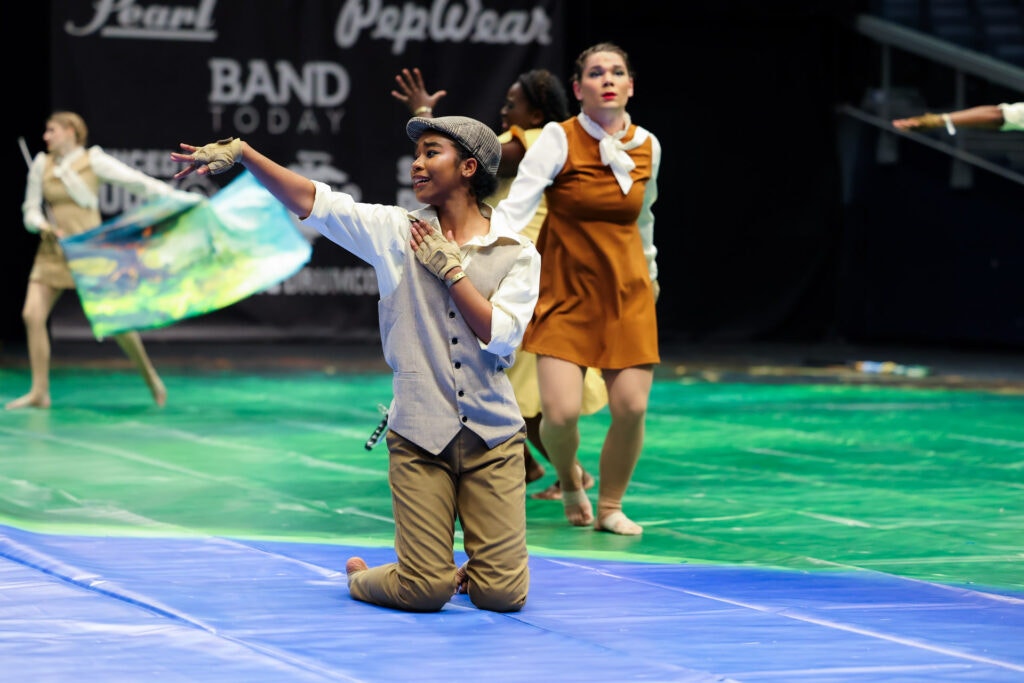
With that idea, the show started coming together. A thought arose to include a unique element: a live vocalist. Palmer describes recruiting a cast member for the role as a moment that took the production to a new level.
“Early on in the development of the show, the staff knew we wanted to end the production with a vocalist. So, we began reaching out and securing vocal talents in our larger community. However, we also knew one of our cast members, Teko Aziaba, is a talented, multifaceted performer,” Palmer says. “During a water break, I approached Teko and asked a ‘what if’ question: what if he represented the father figure in the show and ended the show a cappella. On the spot with little direction, he began confidently serenading the staff. The rest is history.”
While the creative vision had taken shape early, the emotional heart of the program didn’t fully emerge until midway through the season. Performers had a moment of vulnerability with each other where they were able to fully commit to the emotions the production required. It was here that Palmer felt that the show would become what he truly envisioned.
“Dr. Jen McPherson-Jones sat down with the members to help them connect their personal stories to the show. Each member shared personal experiences that they were working through. Even though life was difficult, they held on to a promise that circumstances would get better and ‘a change would come,’ says Palmer. “After this, we didn’t just have our own stories to perform and design. The staff and members were able to carry and share each other’s experiences and stories which made our show even that more authentic.”
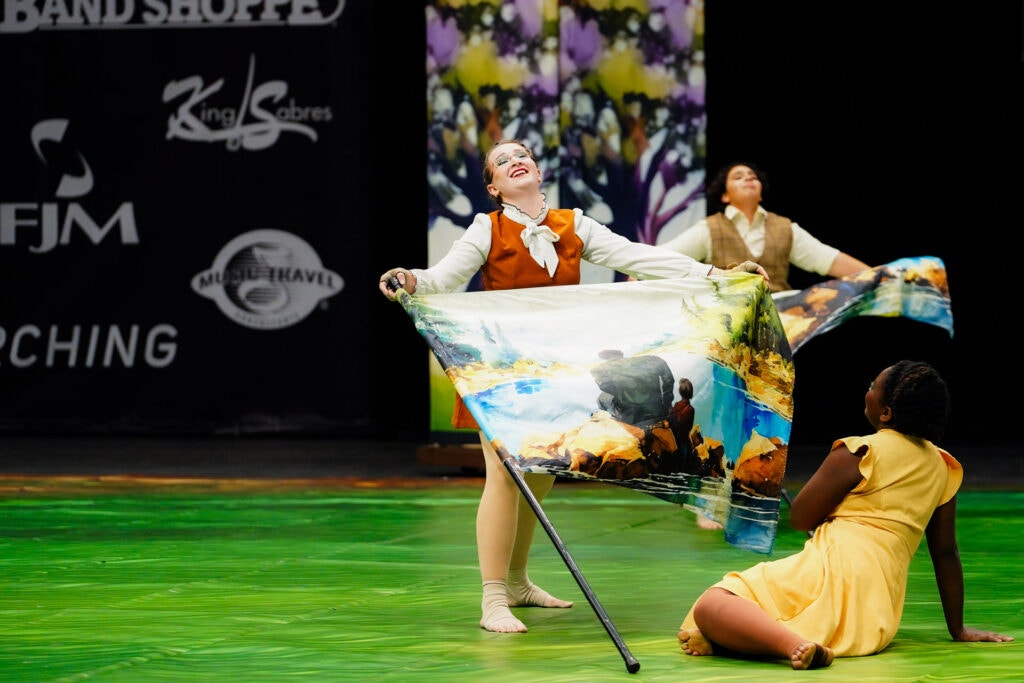
By April, the production had fully blossomed, speaking a powerful message of Black excellence and tenacity. The show went on to place 12th in Independent Open Class finals. Palmer notes how meaningful the achievement was to performers, staff, and audiences.
“It is always an honor to make finals and to represent George Mason University at WGI World Championships. Making finals allows our cast more opportunities to perform a show that we love, and more opportunities for audiences to get to see what we crafted and loved. Making finals is also meaningful since it reflects the dedication, talent, and hard work invested by our cast and staff.”
George Mason University’s 2026 program became a tribute to Black Americans who endured, inspired, and believed during times of hardship. The George Mason University Winter Guard was established in 2008. 2026 was their fourth finals appearance and the group is in active preparation for their 2027 season.
About the author:
Megan Doyle is a freelance feature writer for WGI Sport of the Arts, telling stories that highlight the people, passion, and performance behind the activity. Based in Dayton, OH, she focuses on thoughtful pieces that capture the heart of the marching arts community.