By Kellie Finch
As WGI prepares for its 50th anniversary in 2027, another organization is marking its 90th.
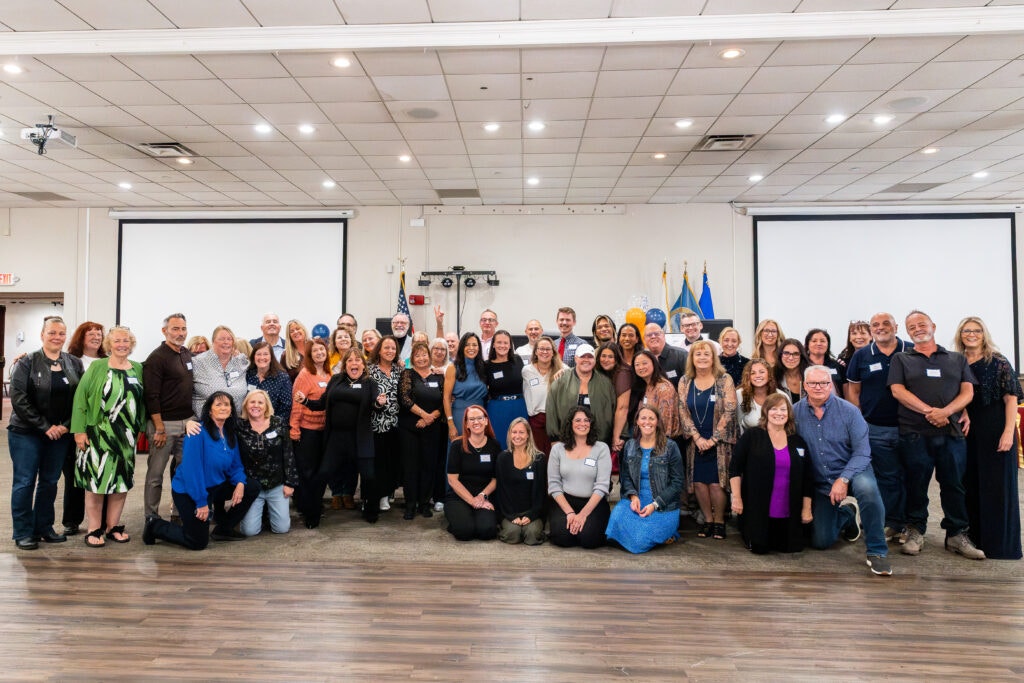
On Sept. 26, Blessed Sacrament, an organization with color guards competing in the Independent World and Independent Open classes, celebrated its 90th anniversary with a recognition event open to alumni, staff, friends and family. The night reflected on the past nine decades of the Blessed Sacrament (SAC) organization, featuring videos, dancing and opportunities to reconnect with members of the community.
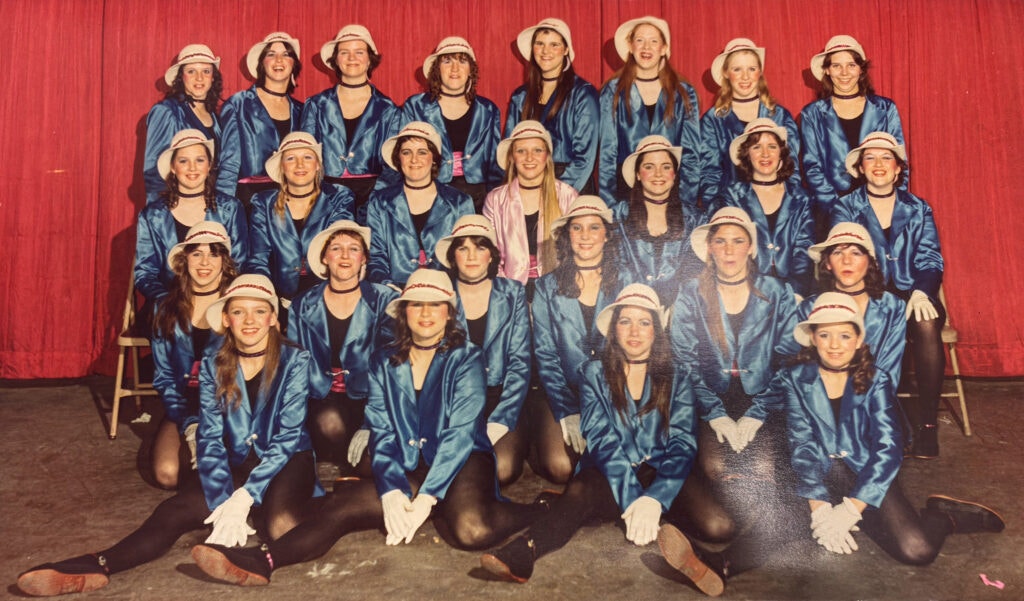
Throughout the 1930s in Boston, Catholic parishes organized drum corps and drill teams to boost morale during the Great Depression, as part of the Catholic Youth Organization (CYO) movement.
Simultaneously, in Cambridge, Massachusetts, the Blessed Sacrament parish drill team formed an all-female performance group for youth in the area, in 1936. The drill team rehearsed and performed outside, similar to a marching band.
The drill team continued until the 1960s, when it became a winter competition group. By the late 1970s, it transitioned exclusively to an indoor winterguard.
In 1979, Blessed Sacrament participated in its first WGI season, and just one year later, the organization made Independent World Class finals. Since 1980, their finals streak has only grown, extending to 45 consecutive placements.
When reflecting on how Blessed Sacrament has maintained its success since the beginning, Director Ed Devlin shared his pride for where the organization began and where it is now, surpassing 90 years.
“It kind of talks about the adaptability that we’ve had over time to keep moving forward,” Devlin said.
Devlin joined Blessed Sacrament in the fall of 1983, shortly after the group began performing with WGI. He had previously been involved in a CYO marching band taught by former SAC director Anthony Zappala, and his two daughters, Dolores and Ann Marie.
Not long after, the Zappalas approached Devlin with a proposition. They asked him to join Blessed Sacrament to help with the group’s marching and maneuvering caption. Despite knowing little about the organization at the time, Devlin said yes.
“I went to my first rehearsal in the late fall of 1983,” Devlin said. “I just haven’t left since.”
Devlin became Blessed Sacrament’s director in 1994. Since then, he has guided the World colorguard through three decades of success, challenges, and adaptations to a changing activity.
One of the biggest changes Devlin has noticed since his start with Blessed Sacrament is the way show design and drill are approached. Early on, drill techs focused on cleaning either side A or side B, but did not do anything with the opposite side, he said. Nowadays, that structure has completely transformed.
“That has all changed now and it’s not as dot-oriented as it was way back then,” Devlin said.
Another shift is the large variety of places performers travel from to participate in Blessed Sacrament, he said. Originally, the ensemble consisted of members from Cambridge or its surrounding areas, but as the colorguard gained popularity, people from all across the country wanted to join in.
“We went to the Buford regional last year and we had to pull kids from nine different airports from around the country,” Devlin said. “[They] fly into Boston every weekend to march with the colorguard.”
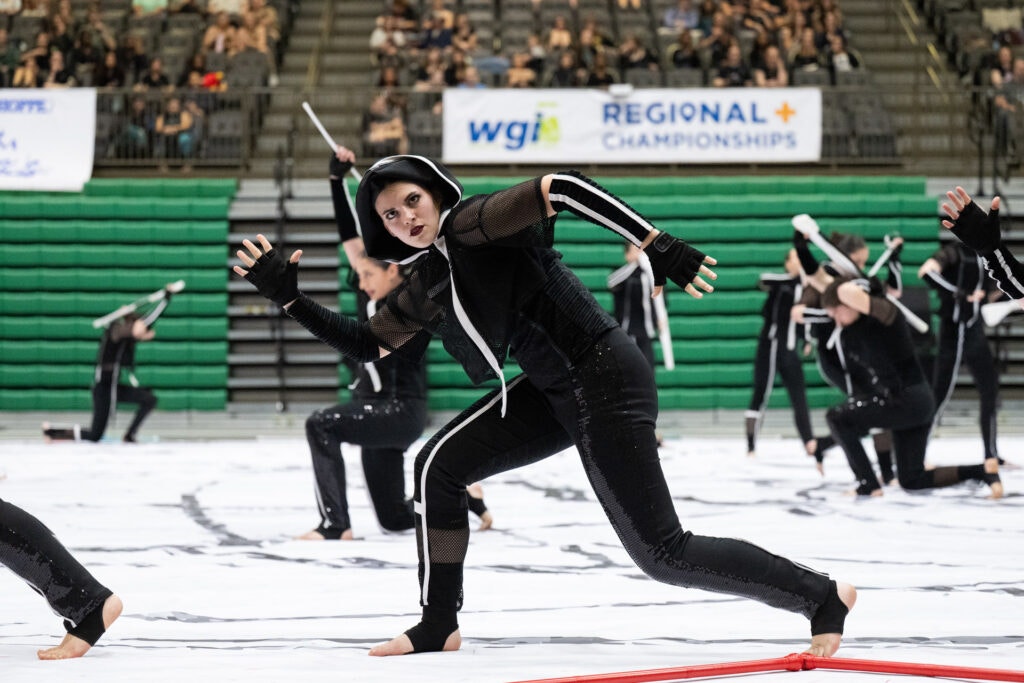
Other things Devlin has noticed are an increase in cost, better protections for participants, and performer growth — both in physical strength and a new desire to push the envelope.
“Everyone has their own look in the World Class,” Devlin said. “It’s important that we keep that direction and keep moving that forward.”
Despite the changes, several elements of Blessed Sacrament have stayed consistent over time — not just since Devlin joined, but from the very beginning.
The first is the promise to have a group no matter its size. This stemmed from Dolores Zappala.
“I will make sure this colorguard keeps going,” Dolores told her father, Anthony. Blessed Sacrament continues to stick to that promise, Devlin said.
“I think the minimum [number of members] we can have is five,” Devlin said. “We’ve never gotten down to five, but that has been the thing. We are going to have a group for someone to participate in at Blessed Sacrament.”
The other primary consistency Devlin has noticed over the years is the members’ love for Blessed Sacrament, each other and performing as an activity.
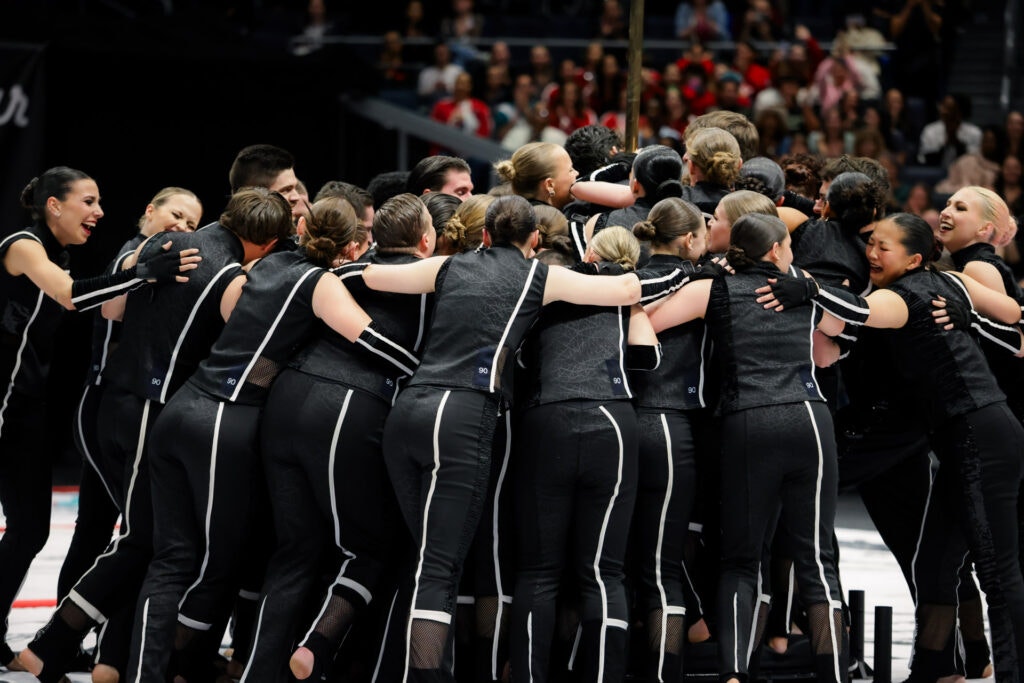
“Our motto is love, trust, and commitment,” Devlin said. “That’s what the organization builds [itself] on.”
Devlin noted that people’s love for the marching arts is evident in his performers at Blessed Sacrament, but he sees it across percussion and winds, too, in all divisions.
“The members, staffs, they love doing it,” Devlin said. “That’s why I think the activity will still be around for a very long time.”
Devlin said he often receives questions from the marching arts community about how Blessed Sacrament is still performing, even after most other groups from the 1980s have left the activity. His answer to them is simple: SAC is a family.
“We have each other’s backs all the time,” Devlin said. “We’re going to make sure that this group keeps going.”
A large part of that family dynamic is the regularity of Blessed Sacrament’s performers and staff. Many members will stay with the World colorguard for nearly 10 years, Devlin said. Furthermore, a large portion of the organization’s staff is composed of Blessed Sacrament alumni, volunteering their time.
Even with years of success, any longstanding organization faces challenges. For Blessed Sacrament, changing environments and increased costs prove to be the biggest hurdles.
As an independent color guard, Blessed Sacrament doesn’t have a go-to rehearsal space, Devlin said. While many scholastic groups can utilize their school gym or other large-enough locations on property, Blessed Sacrament (like many independent groups) must rent spaces.
With that, paying to rent locations for each rehearsal adds up quickly. Adding in travel and hotel rooms costs brings the financial commitment of the activity to a new level that can be overwhelming at times, he said.
Thankfully, Blessed Sacrament has several sponsors that assist with performance elements, such as their rifles and sabres, floors and uniforms, Devlin said. The relationship that Blessed Sacrament has built over time with each of its sponsors is mirrored in the relationship that the SAC staff has with its members, he said.
“They’re going to take whatever you give them and they’re going to bring that to life,” Devlin said. “It’s all about partnership building and having trust with each other.”
When asked what he would tell the original members of Blessed Sacrament if he had the chance, Devlin said that he would thank them for believing in their organization at the time, nearly a century ago.
“Thank you for being the people that laid the groundwork for what we’re doing now,” Devlin said. “By being that first group in 1936, you kind of set the wheels in motion. And it’s our job to keep that motion going forward.”
As Blessed Sacrament continues on past this milestone, Devlin said he hopes the organization stays consistent and looks to the future.
“Let’s set that goal of getting to 100,” Devlin said. “How do we get to 100? It’s about being good to each other, taking care of each other, and making sure that we all still love the activity.”
Throughout his 43 years involved with Blessed Sacrament, Devlin has experienced all different shows, scores, placements, and performers.
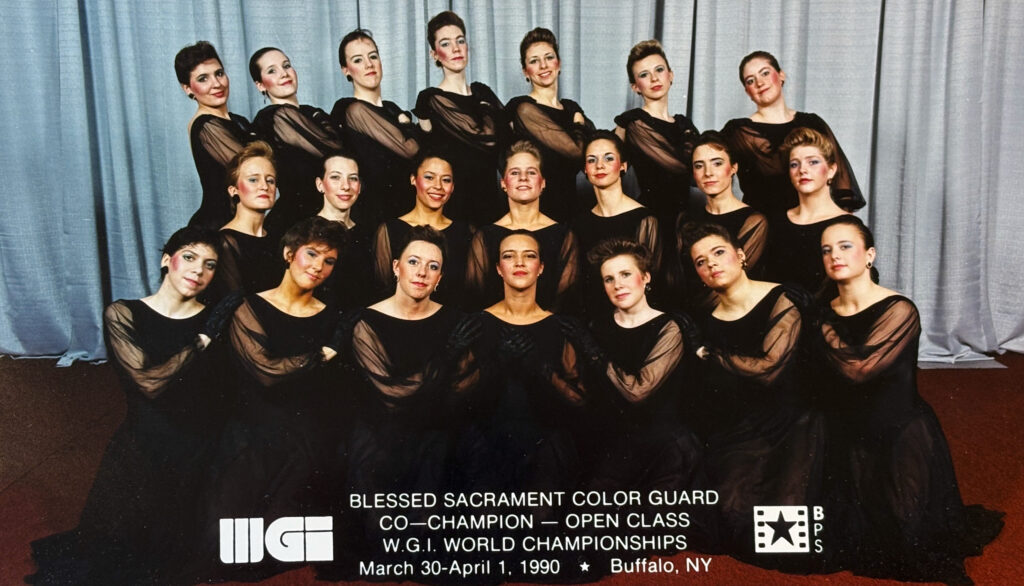
Yet, he said, even now, one of the best parts of the activity is walking onto the University of Dayton Arena floor on finals night and taking in the crowd. That emotion can surpass a lot of the rest, he said.
“Sometimes, could we have been third or second or first or fourth?” Devlin asked. “Who knows? At some point, that kind of goes away and you just worry about what the feeling is walking onto the UD floor on Saturday night. And the response you get when you come on and when you come off is quite amazing.”
As Devlin looks back on Blessed Sacrament’s journey to this significant milestone, he does so fondly. It all goes back to the colorguard’s motto: love, trust, and commitment.
“I’m pretty proud that we’ve kept the organization moving to where it’s at,” Devlin said. “Is it hard work? Yes. Is it enjoyable? Yes. Would I do anything else? No. It’s just about being part of a group of people that loves giving opportunities to performers to do what they do.”
About the author:
Kellie Finch works as the Marketing and Communications Specialist for the North Carolina Center for the Advancement of Teaching. She graduated from the University of North Carolina at Chapel Hill with a bachelor’s degree in Media and Journalism and a minor in Music. Kellie participated in WGI winds all four years of high school, going on to become a member of the Marching Tar Heels in college.