By MJ Johnson
With a distinct voice and highly rhythmic and emotional compositions, it’s not uncommon to hear a Benjamin Clementine song or two during a winter guard competition. With “Nemesis” by Benjamin Clementine as the soundtrack, the 2026 Corona del Sol HS program “In The Company Of My Nemesis” explored the hostility and tension of an enemy dynamic.
Guard director Afsoon McCormack said the show wasn’t just about external conflict, but also confronting an internal nemesis.
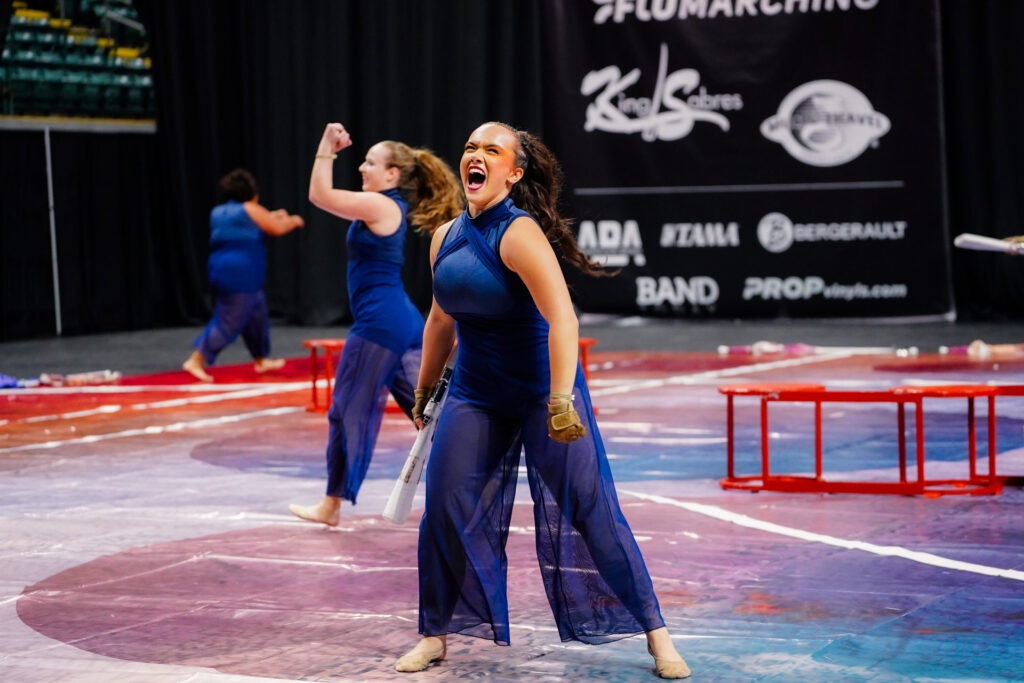
“A significant part of the show centers on the realizations that the person we are struggling against is not always someone else,” McCormack said. “Often, it can be ourselves, our own choices, our internal battles, or the consequences of how we treat the people around us.”
The starting point for the program was the soundtrack. McCormack found “Nemesis” watching the opening sequence of “The Morning Show,” a TV drama about network morning news. In addition to the music, the opening sequence visually is an abstract animation with colorful dots moving in a way that conveys the hostile dynamic between the main characters in the TV show. Circles appear in the design of Corona del Sol’s floor and props, as well as in the show’s opening set.
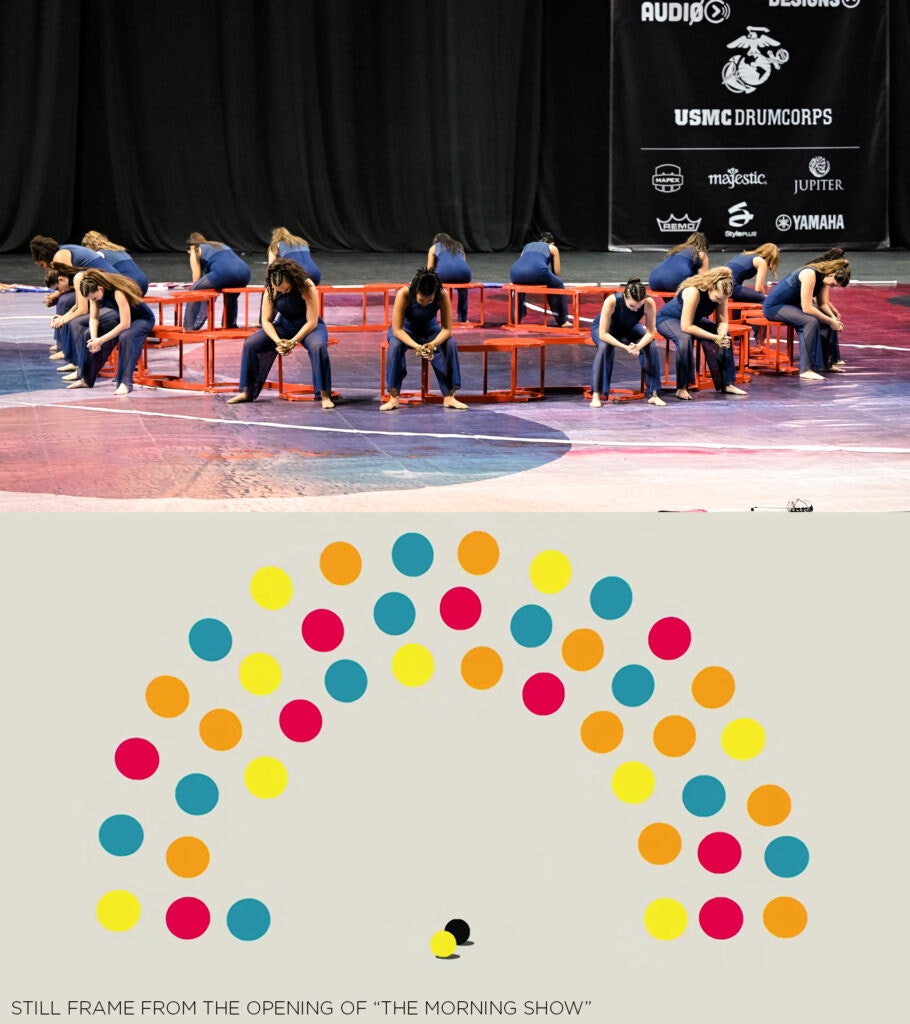
“The song explores ideas of karma, broken promises, and the consequences of how we treat other people,” she said. “We like the idea that this could be interpreted as an essential truth that one can only fully understand after experiencing conflict, making mistakes, and reflecting on their own actions. That gave us a lot of room to explore the relationship between an external nemesis and the internal realization that comes from confronting your own choices.”
The music also inspired the 1970s aesthetic for the program. Contrasting the burnt orange props, the blue costumes were intentionally simple to enhance the visually bold three-seat benches and floor. At several moments during the program, performers occupy the outside seats, leaving the center seat open.
“That empty middle space became a visual representation of what exists between them; the conflict, distance, or unresolved relationship,” Afsoon reflects. “ At the end of the performance, two performers come together and share that center space. For us, that represented the realization at the heart of the show: treating others the way you want to be treated.”
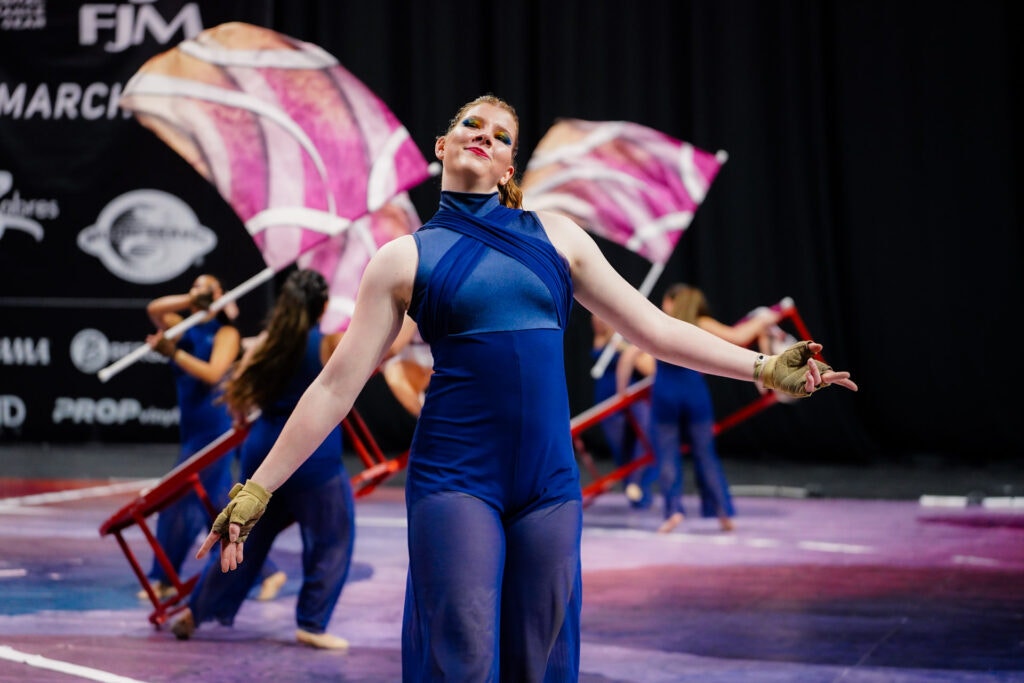
Afsoon notes that they spent a lot of time “experimenting and refining” ways for the performers to interact with the props without the movement feeling labored or distracting from the performance. She thinks that this challenge pushed them to find fun and unexpected ways to incorporate the props into the performance and make three simple seats feel like a bigger part of the story.
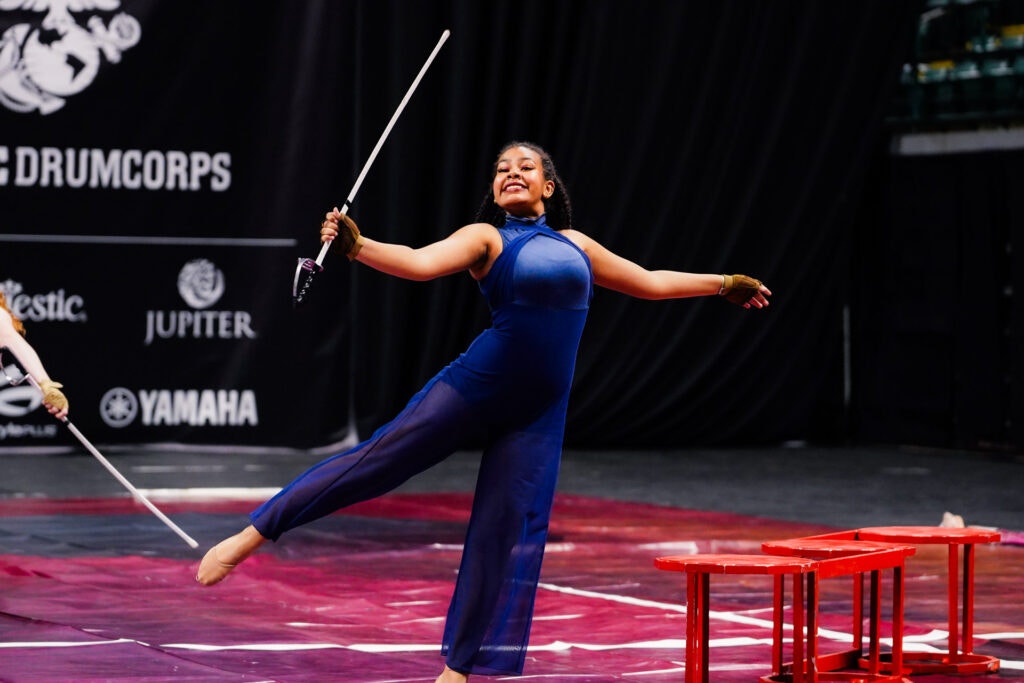
McCormack spoke about the Tempe, AZ school’s journey to semi-finals.
“They genuinely didn’t know if they would have the opportunity to perform in semi-finals, so being able to showcase their show one more time meant so much to them. Watching them walk off the floor knowing they had given everything they had, and seeing how proud they were of the work they had put in all season was incredibly special for me as their director.”
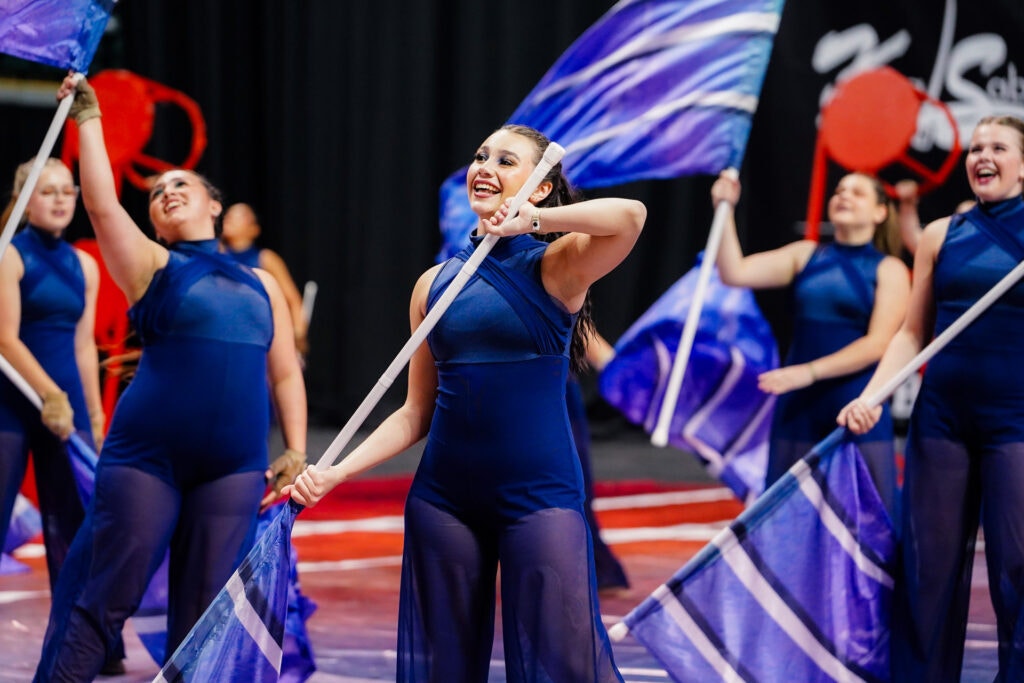
Looking forward, Afsoon is excited to see what her staff and students can create next season.
“I’m proud of how our students continue to represent Arizona with excellence and professionalism. Their commitment and willingness to continue pushing themselves is what makes this program so special,” she shares. “I’m excited to take everything we learned from the past season and see where we can push ourselves next!”
About the author:
Madison Johnson graduated from the University of North Carolina at Charlotte with a BA in English Language and Digital Technologies with a concentration in Technical Writing. She currently works as a copywriter for a Software as a Service company in Charlotte, NC. She was a member of Étude Winter guard for five years from 2015-2019.