By Kellie Finch
Five years ago, when Meraki Percussion was founded as an Independent Open Class ensemble, Executive Director Robert Lowery had a five-year plan. It led back to one thing: becoming World Class. Four years and two consecutive Independent Open Class gold medals later, Meraki did just that — a year ahead of schedule.
“With us winning Open Class back to back, it was just a natural thing to move to the next level,” Lowery said. “The members really wanted that.”
Meraki embarked on its 2025 indoor season in a new class, with fresh goals for the year. The group traveled to Dayton, Ohio, for World Championships, as it did annually. Meraki competed in prelims, then semi-finals. Following the performance, one question lingered: would Meraki make finals? The group loaded its bus and drove back to the hotel. By the time they arrived, scores for the semifinals had been posted.
Meraki made finals.
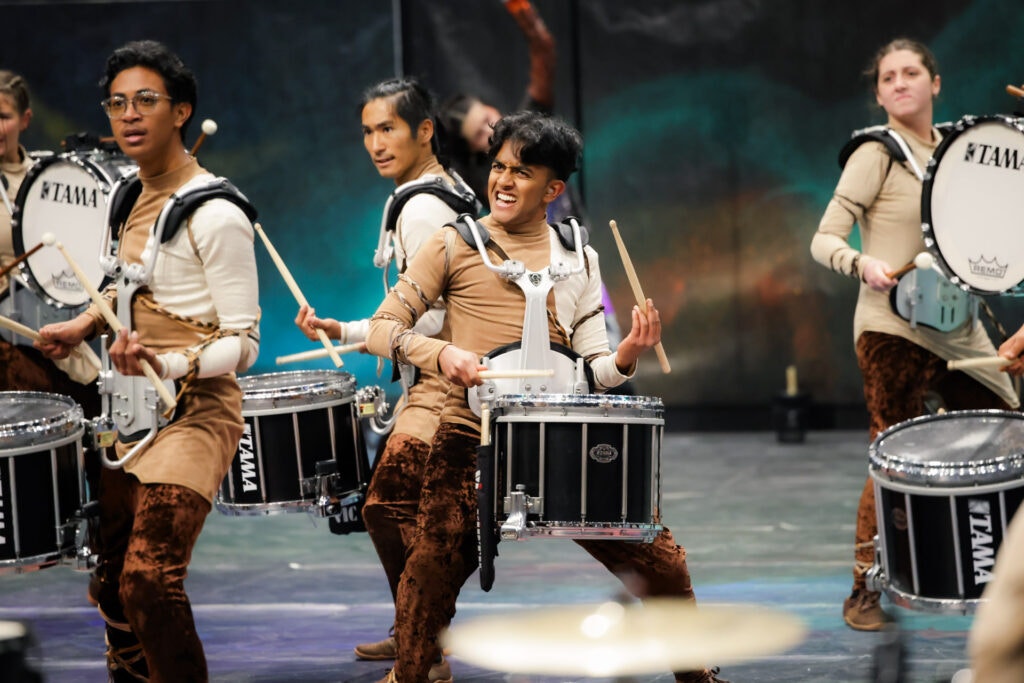
“Lots of happy tears, emotion, hugging,” Lowery said. “Being in World Class for the first year, that was our goal—to make finals.” Despite it being what they strove for, Lowery said the ensemble was filled with shock and a bit of relief.
“That was uncharted territory for us this year,” Lowery said. “It was just like starting a new group from the beginning again.”
When creating their 2025 production, the Meraki design team knew they wanted to continue with their usual style, but also desired something slightly different. Relatability. Emotion. Inspiration.
“That’s why we went with the production that we did this year,” Lowery said. “We felt that the members could really relate to it and really bring it to life.”
The design team hoped to craft a show that they and the audience connected to as well, Lowery said. The staff worked to incorporate this concept into each piece of the show, even using the evocative music they found to inspire the production’s title, “Flickers.” When creating the show, the design team viewed the members and their individual strengths, as well as how they worked as a team, Lowery said.
“We wrote the show to the level of the members,” Lowery said. “To be able to take them to the next level and challenge them, not take it to somewhere they could not obtain.”
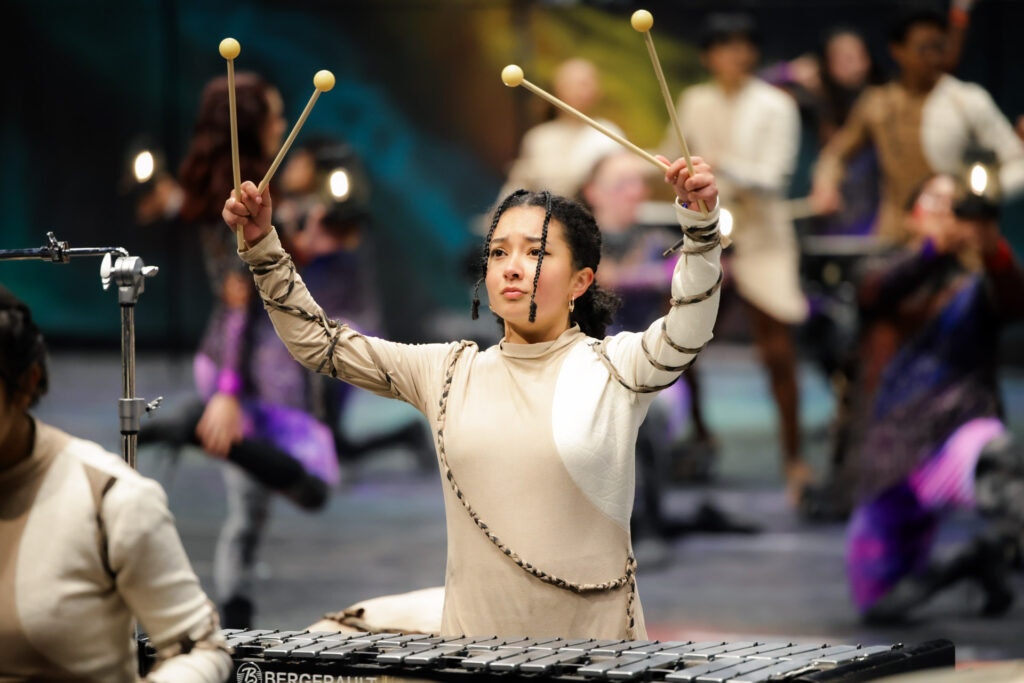
Meraki’s front ensemble was one of the strongest sections going into the 2025 season, Lowery said, so the staff pushed them to a higher level of difficulty with their music. Twenty-nine of Meraki’s 53 members were returners, almost half of them for their third year. This allowed Lowery and the rest of his team to set a new standard for Meraki.
“They have grown with us,” Lowery said. “We knew that it was time to go to the next level.” Starting in December, Meraki fell into a groove with its weekly rehearsals. Despite long hours and busy schedules, the group found a productive balance between hard work and enjoyment.
“It’s a pattern, a cycle, that we have,” Lowery said. “The members know what to do, so it flows really successfully.” Part of Meraki’s new standard traces back to the objectives Lowery and the staff have for the members and each other.
“Some of the other priorities were with the staff,” Lowery said. “Making sure that we also have a great retention in the staff, and that they are also empowered and they believe in the program.” One way Lowery empowers his team is by hiring younger staff members, allowing them room to develop their skills and grow alongside the ensemble. Lowery said he has also worked to strengthen Meraki’s relationships with the local school district and community, with the hope that those schools will eventually feed students back into the ensemble.
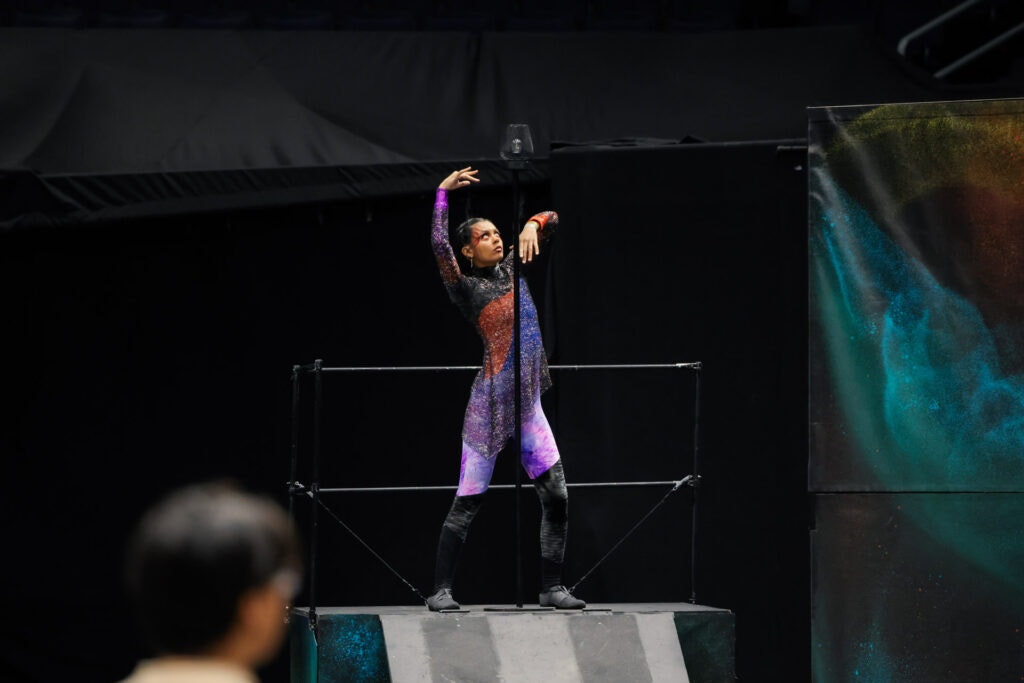
“It’s starting to pay off that the school district that we use is starting to work with us and becoming a community partner,” Lowery said. Although Meraki’s season ran smoothly, it was not without its challenges, Lowery said. Not having a consistent rehearsal facility was the biggest one.
“We had to use three different rehearsal sites this year,” Lowery said. Many districts are restricting the number of non-school activities allowed on their campuses, Lowery said. That, along with increased rental costs and a high number of school sports teams needing to use the facilities, presented challenges for Meraki’s rehearsals.
“We have to be really flexible with these schools,” Lowery said. “The cost to operate has become a challenge, and we’re really focused on not trying to overspend.”These rehearsal complications extended to Dayton as Meraki searched for a venue for World Championships. Many locations are booked far in advance, quickly become unavailable, or only have two-hour time slots, whereas his ensemble intends to hold a full day’s rehearsal, Lowery said. Lowery tries to handle these challenges and logistics behind the scenes as much as possible to ensure his members do not worry. However, he remains honest with his team.
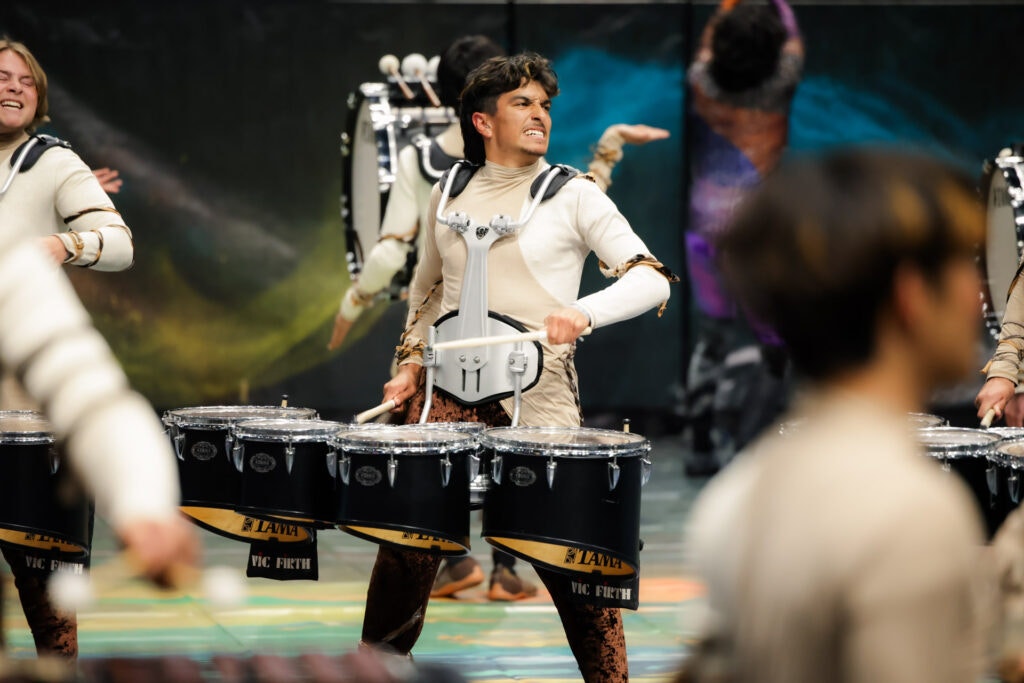
“We plan everything out and are very transparent with the members so they understand what’s going on and give the reasons why we do certain things,” Lowery said. This transparency between Meraki’s team fostered what Lowery described as a “family environment.” Students look forward to the long rehearsal weekends and continue returning for more, he said.
“I always tell the members and everyone, ‘It’s not my organization, it’s ours,’” Lowery said. “They have a sense of ownership and empowerment. That keeps them motivated.” Meraki’s staff encourages honesty from its members as well, to determine how they can work together to make each season its best, Lowery said.
“We do a survey at the end of each season to see what they like, what they didn’t like, what they would like to see us change,” Lowery said. “We take their feedback and make adjustments during the off-season to keep improving our program.” This drive is encouraged by the staff, but the members primarily foster it on their own, Lowery said. The continuous love and support the members show for each other furthers Meraki’s family dynamic and sets the ensemble up for success.
“A lot of the members, at the end of the season, say they feel really safe and at home,” Lowery said. “They feel Meraki is home for them.”
About the author:
Kellie Finch is an undergraduate student at the University of North Carolina at Chapel Hill pursuing her BA in Media and Journalism through the Hussman School of Journalism and Media. At UNC, she is a member of the Marching Tar Heels in the tenor saxophone section. She participated in WGI Winds during all four years of high school playing the alto saxophone, where she discovered her love for music and the activity through her experiences and the people she met.